Korea is on the brink of extinction.
Marriage is collapsing. Birthrates are the lowest in the world. A nation that does not reproduce eventually disappears.
The Demographic Reality
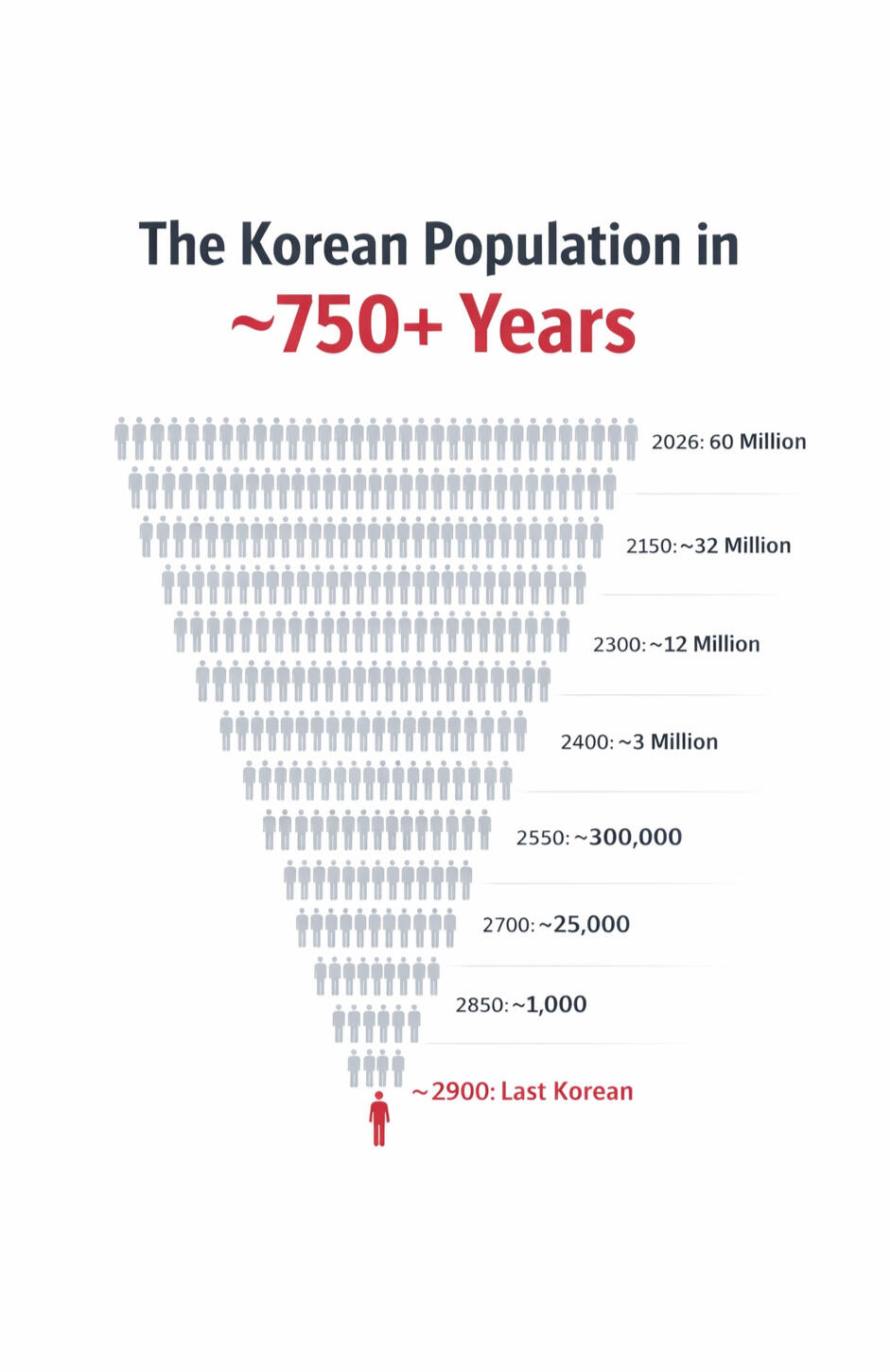
Fewer children are being born than at any point in modern history, and each generation is now smaller than the one before it.When a country averages fewer than two children per family, long-term decline becomes unavoidable.This is not a temporary fluctuation, but a sustained trend that will cause Korea’s population to fall generation after generation. Left unchanged, the population eventually reaches zero.
0.7
Children per Woman
-50%
Fewer Babies than Before
250K
Babies Born Last Year
What happens when there’s no one left?
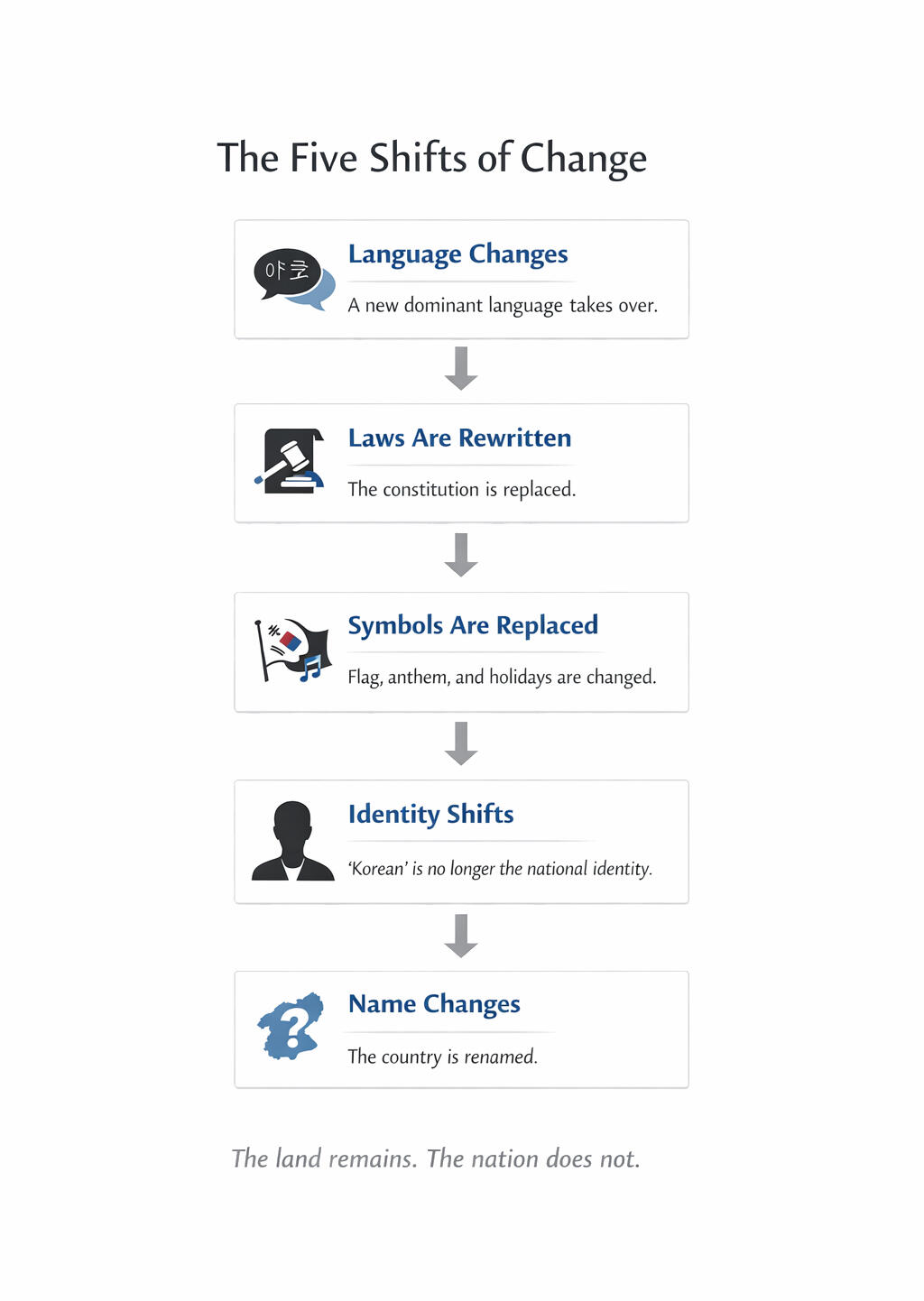
Eventually, 100% of the population will be non-Korean as immigration replaces a shrinking native population. At that point, the country ceases to be a Korean nation.
When the people are gone, the nation is gone.
The End of Korea
Once the country is devoid of ethnic Koreans, the language, culture, and everything else distinctly Korean will be replaced by that of the new inhabitants of the land.It would only be a matter of time before a new national identity replaces the old one.Korea and the Korean people would exist only in history—preserved in records and artifacts, displayed in museum exhibits.
How did we get here?
Pressure. Distrust. Isolation.
Several forces are converging to drive this decline. Together, they are steadily dismantling the foundations that sustain families. Here’s a closer look at what’s behind it.
the weight keeps piling up

The Cost of Modern Living
Cost of Living
Life is expensive, and raising children requires significant time, money, and effort.Career Demands
Long hours and constant pressure consume most of the day, leaving little time and energy for family life.Rising Expectations
Expectations are high—from building a stable life to raising capable children.For many, starting a family feels overwhelming.
something between us is slipping
The Breakdown of Relationships
Increased Reluctance
More women are questioning whether the cost of motherhood is worth it—physically, emotionally, and in terms of personal freedom.Growing Cynicism
Distrust and negative expectations have made interactions between men and women more guarded and less open.Gaps in Attraction
Many men struggle to develop the confidence, social awareness, and interpersonal qualities needed to attract and sustain relationships.As trust declines and attraction falters, fewer relationships take hold.
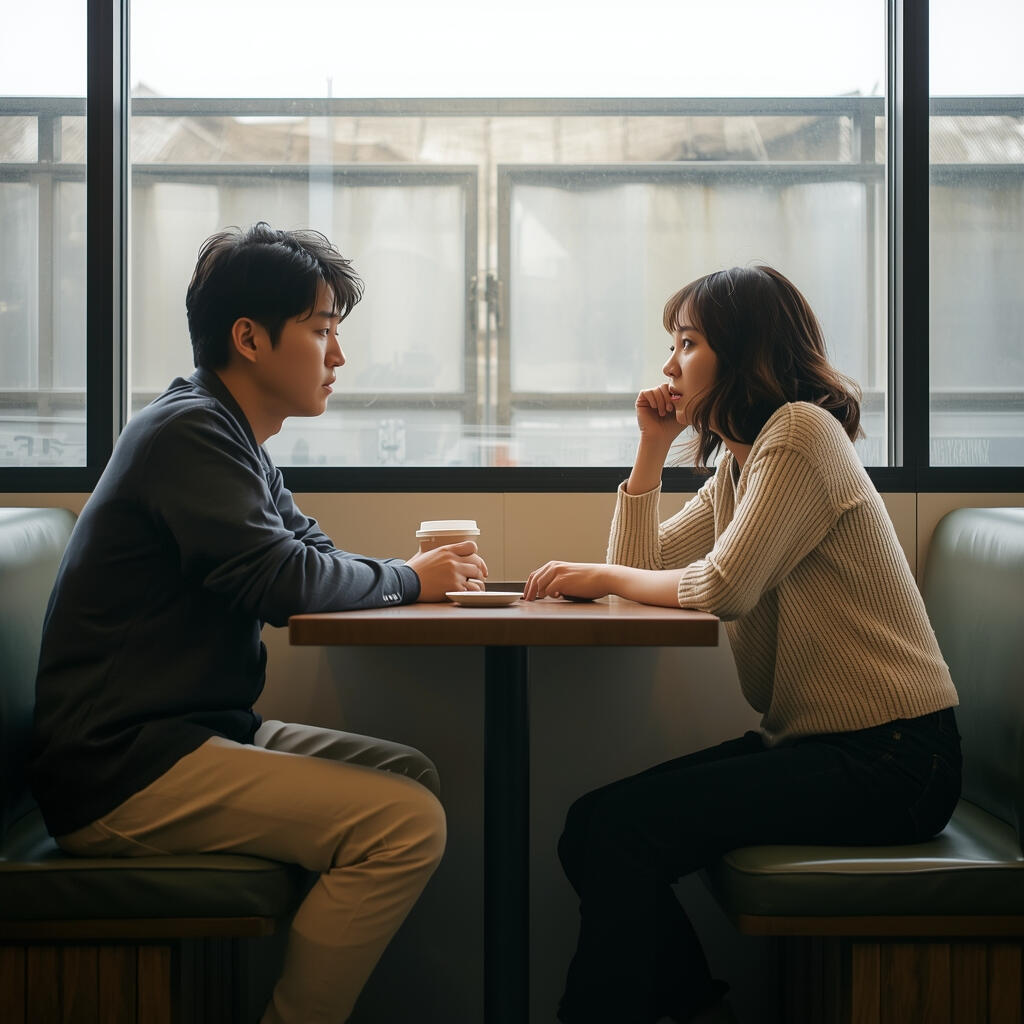
alone has become the new normal
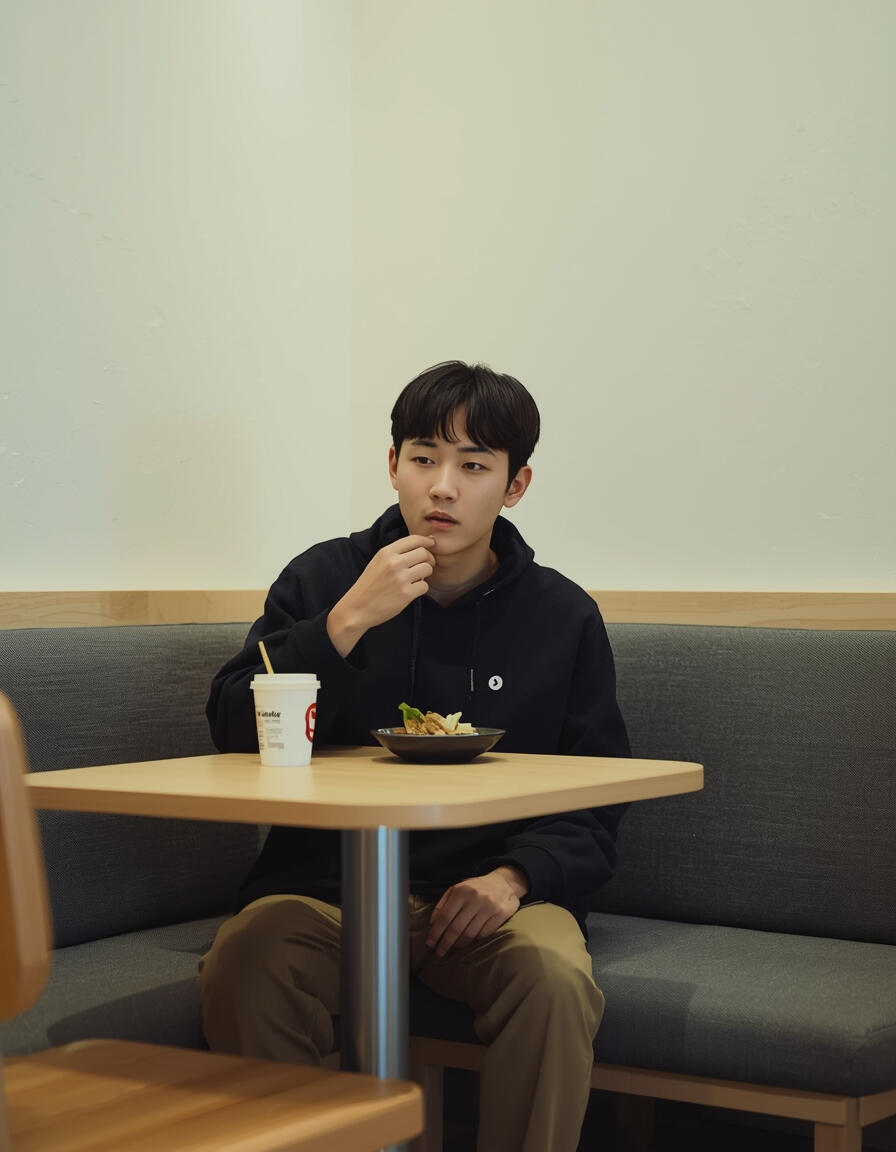
The Rise of Isolation
Delayed Commitment
Marriage and long-term relationships are being pushed further and further back—or given up on altogether.Shrinking Social Circles
People have fewer opportunities to meet and connect, as work and individual routines take priority.Comfort in Independence
Living alone becomes easier and more familiar, reducing the urgency to seek out relationships.Over time, being alone becomes the default, and relationships seem like a distant notion—out of reach for most.
5×
Home Price-to-Income
60%
Not in Relationships
7M
Single-Person Households
this isn't about blame
It's the system.
Not the people.
The Real Problem
This isn’t about men or women falling short.The cost of living is high, work is demanding, and expectations around marriage and raising children are heavier than ever.At the same time, a fast-paced, high-pressure environment makes it harder for people to connect and build strong relationships.Even the ways people meet and interact have shifted, making meaningful connections less likely to form.Over time, people adapt—living alone becomes familiar, and starting a family feels less realistic.These are not personal failures—they are responses to the conditions people are living in.

Korea
is
falling.

Now
we
rise.

The economy won’t change overnight.
We'll continue to study it and develop solutions over time.
What can change is how people think, act, and relate.
The issue isn’t economic alone.
The way people relate to one another plays just as big a role.
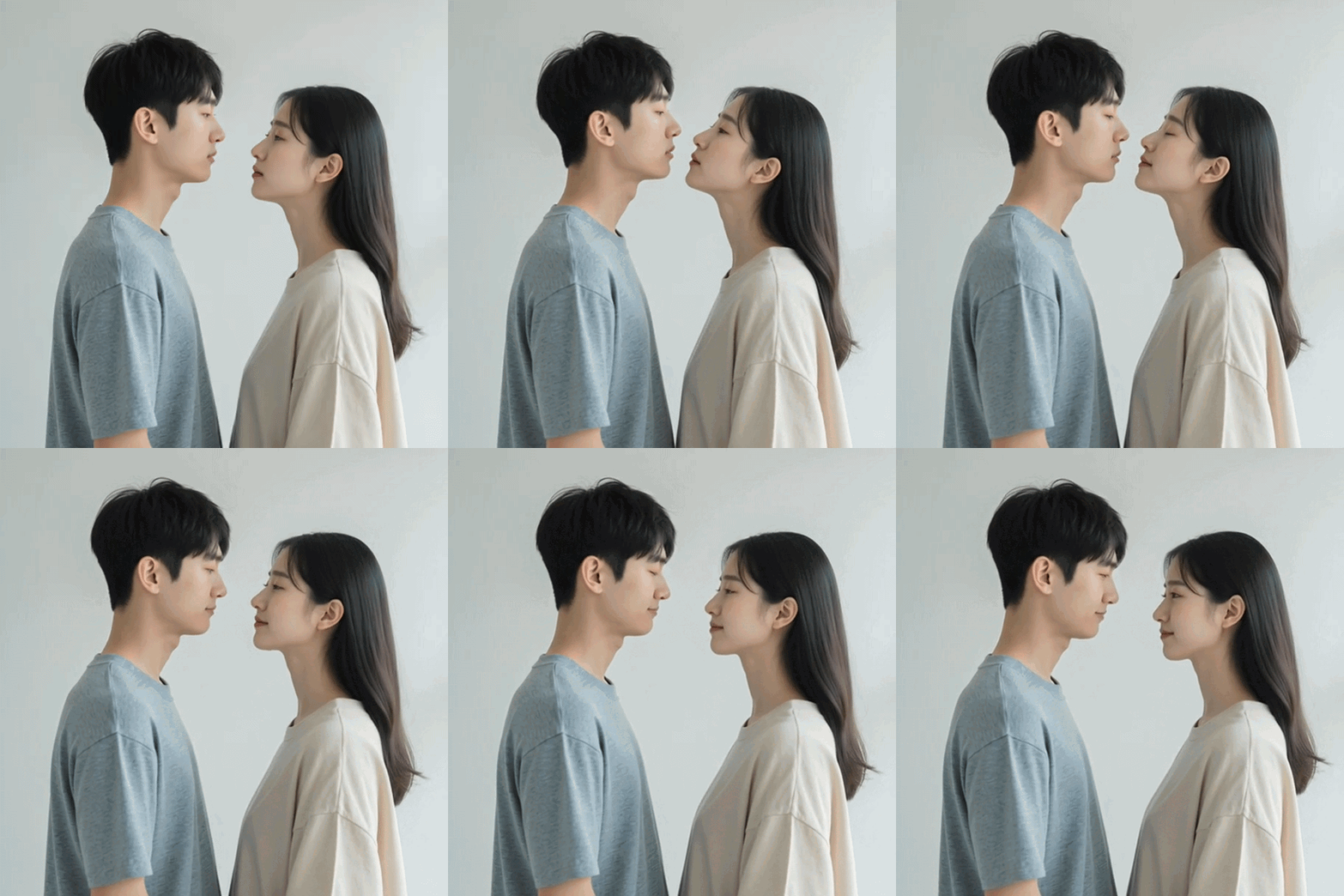
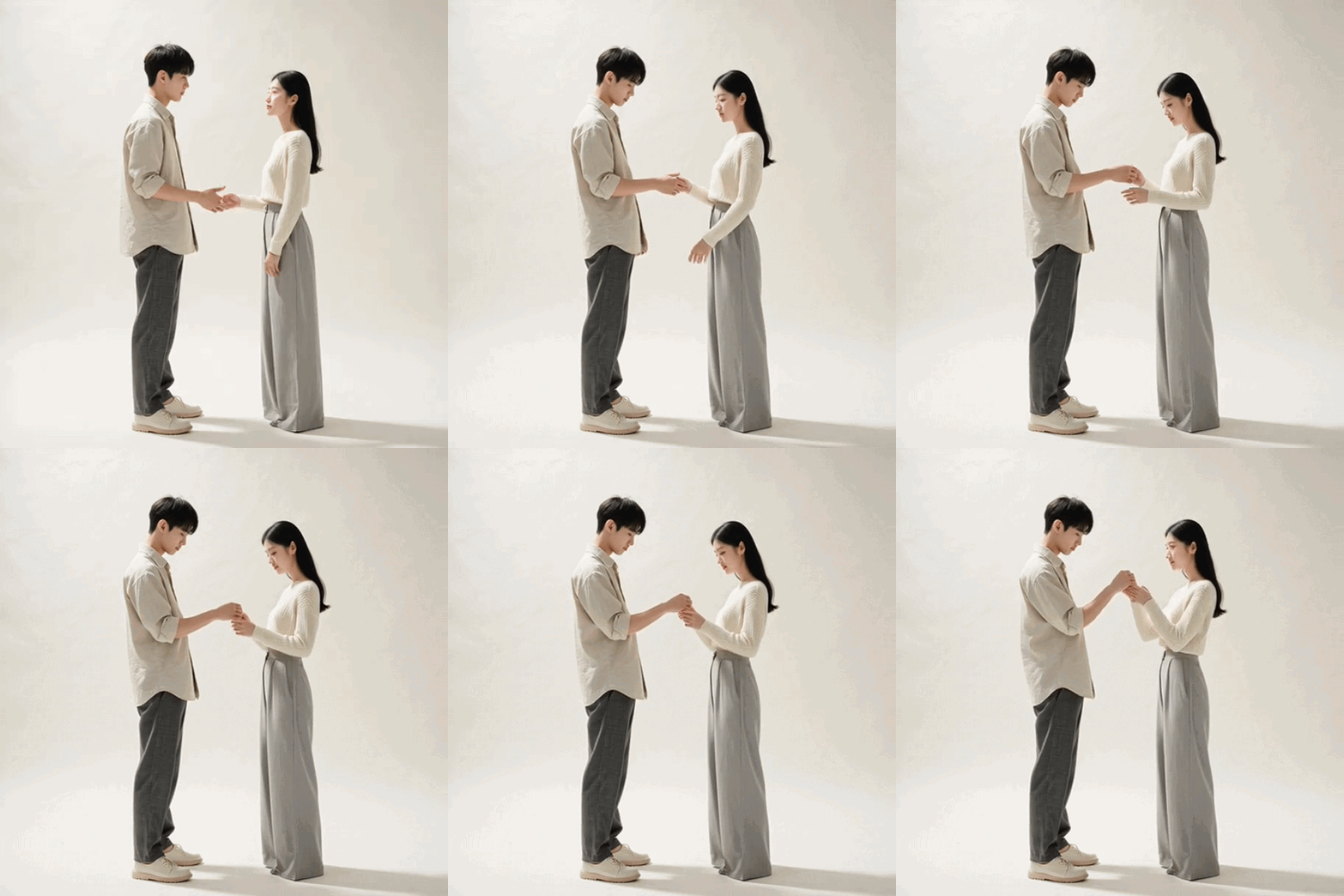
In most cases, the gap between men and women doesn’t close on its own.
It’s usually the man who has to bridge it—to attract, to initiate, and to create something worth stepping into.
We show you how to close that gap.
For Korean men who feel stuck, overlooked, or unsure how to move forward:
We work directly with you to build the qualities, skills, and presence that lead to real attraction.
But this goes beyond attraction.
It’s about becoming confident, capable, and steady—no matter the situation.
Explore men’s coaching
Attraction isn’t random.
It’s built on a set of qualities—here are some of the ones that matter most:
Sense of Humor
Real humor comes from genuinely finding something funny yourself and sharing it naturally.
That authenticity makes interactions feel natural and draws people in.

Sexual Energy
A strong sexual desire for his woman, expressed naturally.
It’s a core part of attraction—without it, things fade. When it’s there, it reflects health and vitality, and should be celebrated, not stigmatized or suppressed.
What Makes a Man Truly Attractive

Intellectual Presence
Thinking beyond the obvious—driven by deep curiosity, sharp questioning, and the ability to break things down to their core.
Often unconventional and ahead of the curve, this level of clarity brings depth to conversation and gives his presence real weight.

Command of Language
The ability to express ideas clearly, especially when they’re complex or nuanced.
It allows a man to communicate with clarity, confidence, and impact in any situation.
Romantic Devotion
An unwavering commitment and passion directed toward one woman.
It builds trust, emotional security, and a deep sense of being valued.

Cool Factor
The culmination of these qualities coming together into one cohesive presence.
It’s the unmistakable impression of a man who is grounded, capable, and naturally compelling.
Most men never reach this level.
In our coaching, we focus on what actually matters—developing the qualities, skills, and presence that change how others see you.No fluff. No guesswork. Just clear direction and real application.The goal isn’t to chase attraction.
It’s to become someone who naturally creates it.Some areas we work on may not seem directly related at first—public speaking, English improvement, multi-role scenarios.
Over time, it becomes clear how everything connects.If you’re ready to take this seriously, have a closer look.

What We Should Be Working Toward
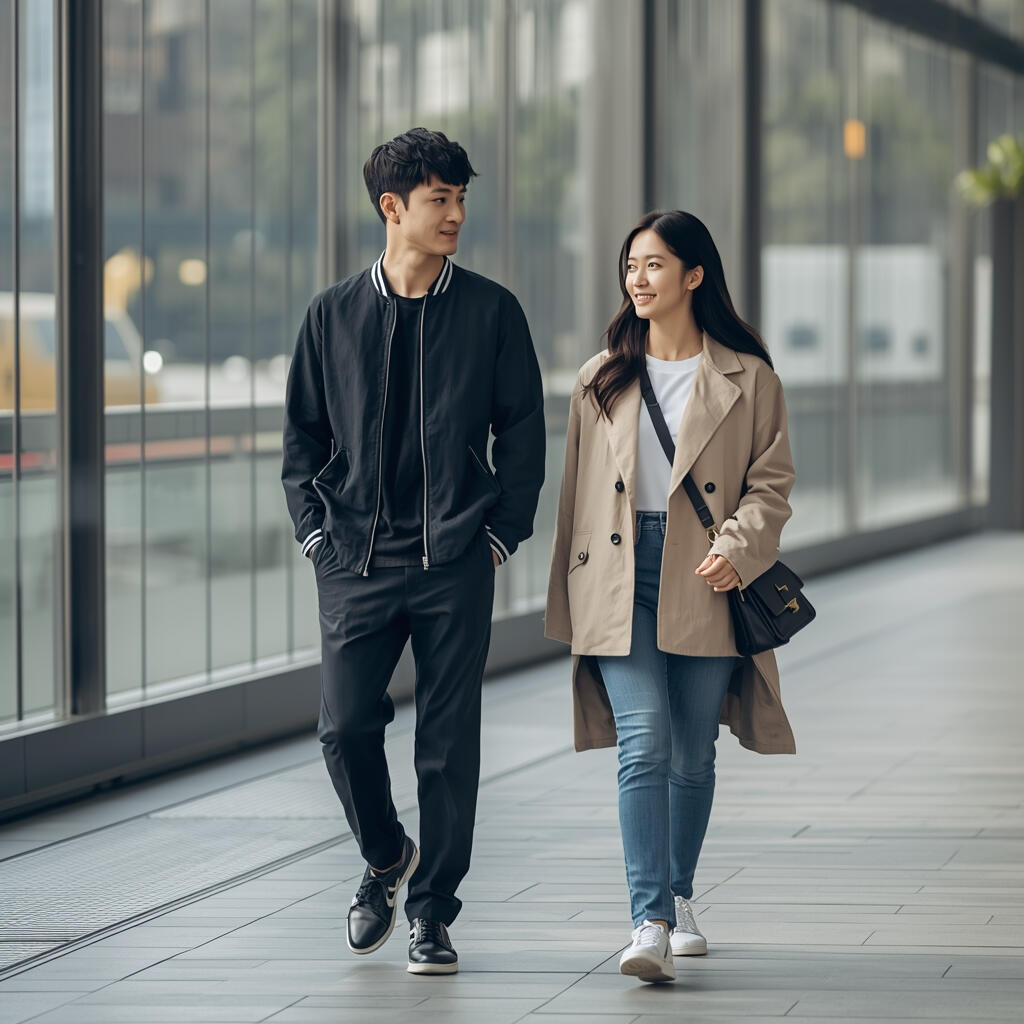
Healthy Relationships
• More people actively dating and forming relationships• Marriage as a common and expected life path• Clear progression: dating → commitment → marriage• Lower long-term singlehood and disengagement• Stable, lasting partnerships
Strong Family Formation
• Fertility at or above replacement (2.1+)• Two-child families as a common norm• Earlier, stable family formation• Shorter gap between marriage and first child• Children raised in stable, two-parent homes


Work That Supports Life
• Work hours that allow for life outside of work• Affordable housing enabling early independence• Career paths that don’t delay major life milestones• Time and energy for relationships and family• Reduced financial pressure tied to marriage and children
Social and Cultural Alignment
• Open discussion of social realities• Environments where people can meet and connect naturally• Healthy dynamics between men and women• Positive view of marriage and long-term commitment• Strong desire for family and children• Korean and global contexts